
Wheel Care & Maintenance
Premium wheels are a functional safety component - but also a finish-sensitive piece of design. With the right routine, your wheels will stay looking “new” for years, and you’ll avoid corrosion, staining, and clearcoat damage.
Golden Rules
- Never wash hot wheels. After hard driving/track use or sitting in direct sun, let wheels cool first. Sudden temperature change + cold water can contribute to surface damage and can create micro-cracking in the finish.
- Use pH-neutral / acid-free products. Harsh or acidic cleaners can stain or dull finishes and accelerate corrosion.
- Use only soft tools. Microfiber towels + soft wheel brushes only – no harsh sponges or aggressive pads.
- Rinse first, clean top-to-bottom, rinse thoroughly. This reduces scratching and prevents re-contaminating already-clean areas.
- Dry your wheels after washing. Leftover water + chemical residue + road salt can etch the finish over time.
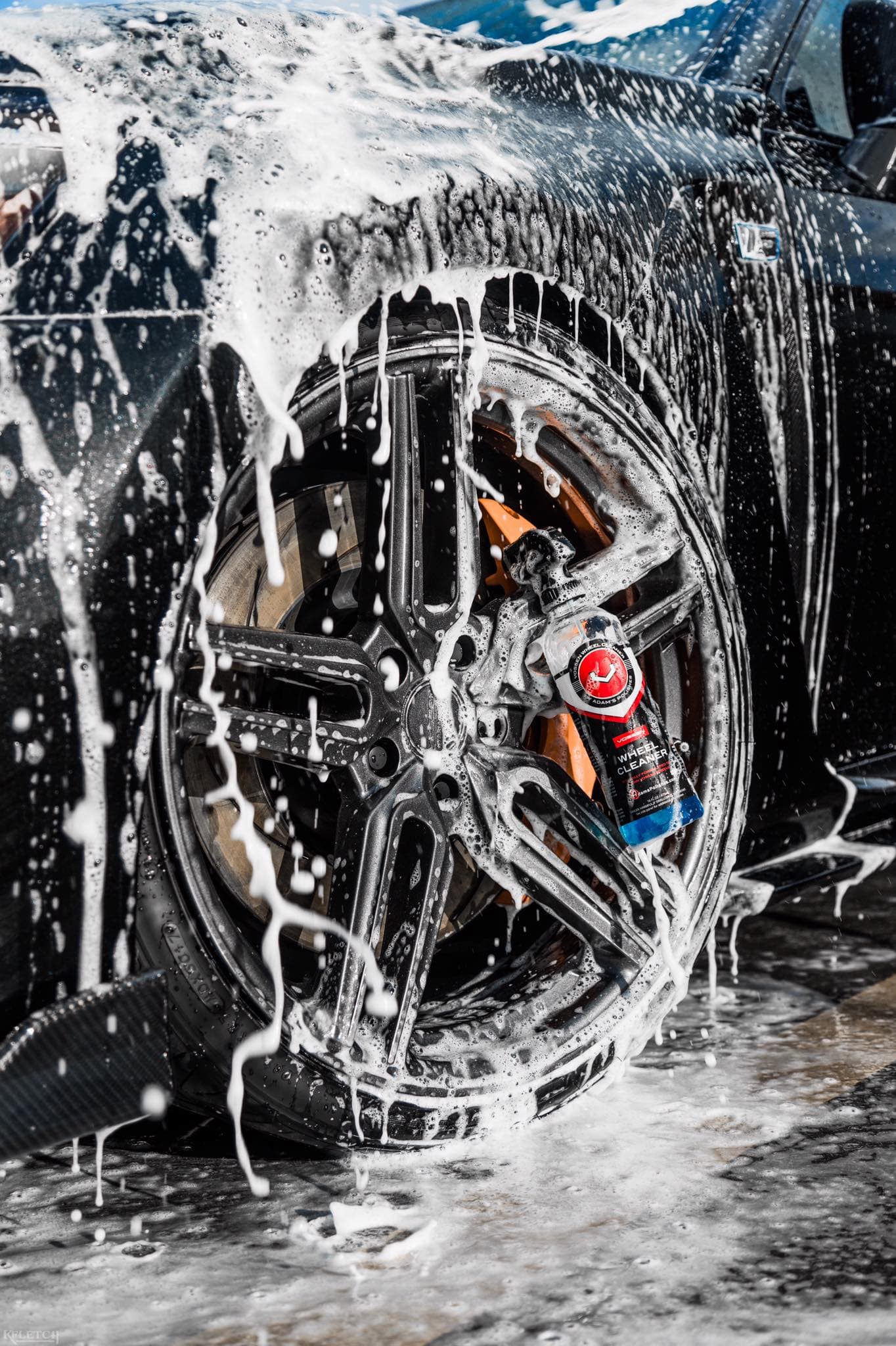
Recommended wheel cleaning routine
1) Prep
- Park in the shade if possible.
- Make sure wheels are cool to the touch.
- Use a separate bucket/tools for wheels (don’t reuse paint wash mitts).
2) Rinse
- Rinse the wheel and barrel thoroughly to remove loose sand and brake dust.
3) Clean (pH-neutral wheel cleaner)
- Spray a pH-neutral, finish-safe wheel cleaner.
- Agitate with soft wheel brushes (spokes, lug area, barrel).
- Work from the top and around so you don’t re-soil cleaned sections.
4) Rinse thoroughly
- Rinse until all cleaner is gone - especially around bolt heads, valve stems, center caps, and behind spokes.
5) Dry (important)
- Dry with a clean microfiber towel to prevent water spotting and mineral marks.
Pro tip: If your area has hard water, drying is everything. Water spots are usually minerals left behind, not “dirt”.
Brake dust & “heavy contamination” (track / spirited driving)
Performance pads create more brake dust and can bake it onto the surface.
- Start with the routine above first.
- If brake dust remains embedded, use a wheel-safe iron remover / decontamination product occasionally (not every wash), and follow product dwell-time instructions carefully.
- Never let chemicals dry on the wheel. Rinse sooner rather than later.
Finish-specific care notes
Painted / powder coated finishes (best all-round durability)
These are generally the most resilient for daily use and winter driving. Use standard pH-neutral wheel cleaners and microfiber drying.
Polished / machined / brushed / “cut” faces
These finishes look insane… but are more sensitive.
- Avoid strong chemicals and never let product dwell too long.
- Dry immediately.
- Not recommended for winter/salt use unless you’re extremely disciplined with cleaning/protection.
Matte finishes
Matte surfaces can be ruined by the wrong products (they can fill the texture and create unwanted shine). Use matte-specific cleaners and soft microfiber only.
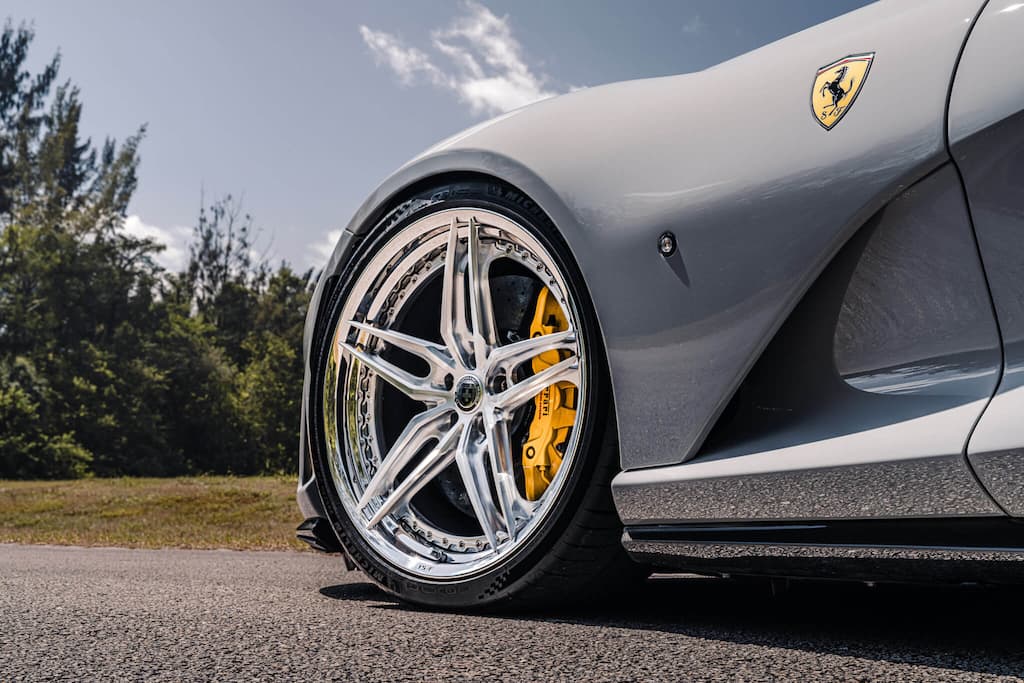
Winter use
Road salt and de-icing chemicals are the fastest way to destroy sensitive finishes.
Salt = The Enemy
- If you drive in winter conditions: choose solid painted / powder coated finishes for your winter wheel setup.
- Clean winter-driven wheels often (weekly if exposed to salt is a good rule of thumb).
- Always dry after washing and store wheels in a dry environment.
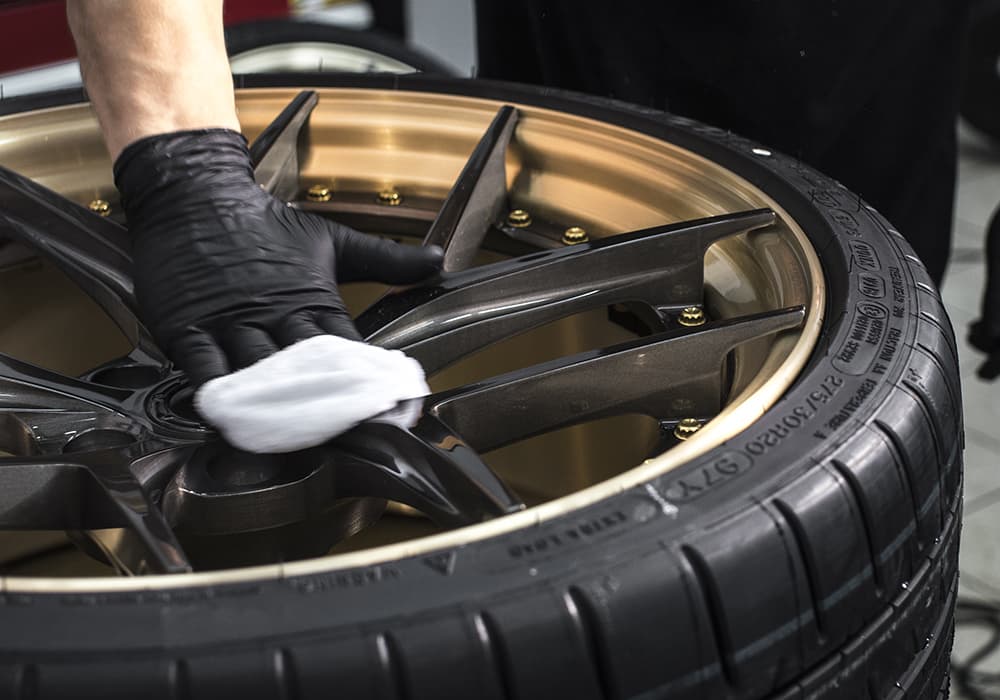
Ceramic Coating
A proper wheel-rated ceramic coating:
- Makes wheels easier to clean
- Reduces brake dust bonding
- Adds a protective layer (especially valuable for polished/machined faces)
Guidelines:
- Use a coating that is rated for wheel temperatures (heat resistant).
- Apply on perfectly clean/decontaminated wheels.
- Reapply based on product guidance; many owners refresh before winter season.
Inspection & Damage
Wheels are high-speed rotating parts and structurally important for safety.
If you notice:
- curb rash that’s deep
- cracking
- bends
- air leaks
- vibration after impact (pothole/curb)
…stop “guessing” and contact us or a qualified wheel specialist. Cosmetic repairs are common, but structural damage must be evaluated properly.
Quick “DO / DON’T”
DO
- Wash cool wheels
- Use pH-neutral / acid-free products
- Use microfiber + soft brushes
- Dry after washing
- Consider ceramic coating
DON’T
- Wash immediately after track/hard driving
- Use acidic wheel cleaners or harsh degreasers unless finish-approved
- Use abrasive sponges / scuff pads
- Let chemicals dry on the wheel